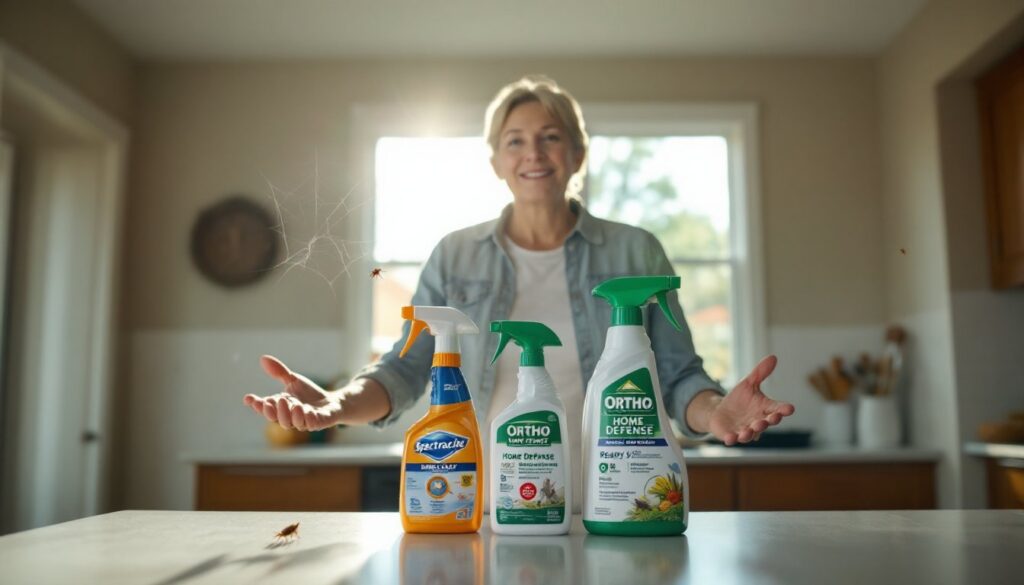

When insects invade your home, you need a solution that works fast and reliably. Two names stand out on shelves across the country: Spectracide and Ortho Home Defense. Both are trusted by homeowners tackling everything from spider webs in corners to cockroaches in kitchens, but they’re not identical products. The right choice depends on what pests you’re fighting, where you’re spraying, and what matters most, speed, coverage, safety, or budget. This comparison breaks down the real differences so you can make an informed choice without guessing.
Table of Contents
ToggleKey Takeaways
- Spectracide delivers fast knockdown action with prallethrin and costs $4–$8 per can, making it ideal for quick indoor pest elimination, while Ortho Home Defense offers residual protection lasting up to three months indoors with bifenthrin, better for long-term perimeter defense.
- Ortho Home Defense covers larger areas efficiently with formats like 1-gallon perimeter jugs (up to 1,200 square feet) and hose-end sprayers, while Spectracide works best for targeted spot treatments in smaller spaces with its compact trigger-spray bottles.
- When comparing Spectracide vs Ortho Home Defense safety, Spectracide breaks down faster with less environmental persistence, while Ortho’s bifenthrin lingers longer on surfaces but requires extra caution around gardens and water features.
- Both products are EPA-registered synthetic pyrethroids effective against ants, spiders, roaches, and other common household pests, but Spectracide excels for immediate infestations while Ortho prevents recurrence longer.
- Many experienced homeowners use both products strategically: Spectracide for sudden indoor pest outbreaks and Ortho Home Defense for consistent perimeter protection throughout the season.
- Read labels carefully and combine chemical treatment with housekeeping—seal cracks, remove clutter, and eliminate water and food sources for maximum pest control effectiveness.
Key Differences Between Spectracide and Ortho Home Defense
Active Ingredients and Formulation
Spectracide relies on prallethrin as its primary active ingredient, a synthetic pyrethroid that works by attacking an insect’s nervous system. Pyrethroids mimic natural compounds found in chrysanthemum flowers and are known for fast knockdown action, pests stop moving quickly. The formulation is water-based, which means less odor and easier cleanup than oil-based alternatives.
Ortho Home Defense, on the other hand, uses bifenthrin, also a synthetic pyrethroid but with a slightly different structure and persistence profile. Bifenthrin tends to linger longer on treated surfaces, providing what manufacturers call “residual protection” for up to three months indoors and six months outdoors. This means you spray once and get longer-lasting protection without frequent reapplication.
Both ingredients are EPA-registered and approved for household use, but they metabolize differently in the body and environment. Bifenthrin breaks down more slowly in soil and water, which is important if you’re spraying near gardens or water features. Prallethrin, by contrast, degrades faster, making it gentler on non-target organisms in the short term.
Coverage Area and Application Methods
Spectracide products typically come in ready-to-spray bottles with a trigger mechanism or aerosol cans. Most formulations cover 400–500 square feet per can and are designed for indoor and outdoor use. The spray pattern is fairly fine and disperses quickly, so you get good coverage of baseboards, corners, and window frames with minimal overspray. Application is straightforward: shake, aim, and spray in a sweeping motion.
Ortho Home Defense offers multiple formats: ready-to-spray bottles, a perimeter spray jug (covers up to 1,200 square feet), and a hose-end sprayer for larger outdoor areas. The larger perimeter jug is a game-changer for homeowners who need broader coverage, especially around foundation lines and exterior entry points. Hose-end applicators require less arm fatigue for treating decks, patios, and landscaping beds, you just attach it to your garden hose, dial the concentration, and spray.
For interior spot treatments, both work equally well. For whole-home perimeter defense, Ortho’s larger-capacity options save time and money per square foot. If you have pets, kids, or a smaller space, Spectracide’s compact bottles offer more precise control.
Effectiveness Against Common Household Pests
Testing data from expert reviews of bug sprays shows that both products kill a wide range of indoor and outdoor pests, but with slightly different timelines and target lists.
Spectracide excels against fast-moving pests like ants, spiders, and roaches because its prallethrin delivers a quick knockdown, insects are dead or immobilized in minutes. Homeowners often use it for immediate infestations when they see bugs in real time. It’s also effective on flies, gnats, and mosquitoes indoors and outdoors. The downside: if you miss a few bugs or more emerge later, you’ll need to reapply sooner.
Ortho Home Defense handles the same pests but shines when you need ongoing prevention. Its bifenthrin residue remains active on treated surfaces for weeks or months, catching newly arrived insects before they can establish. This makes it better for preventative perimeter sprays around doors, windows, and foundation cracks. For heavy infestations, you might still see faster results with Spectracide’s instant action, but Ortho prevents recurrence longer.
Neither product is a guaranteed one-spray solution for severe infestations, persistent problems often require multiple applications, professional pest control, or addressing the source (standing water, food debris, entry points).
Safety, Toxicity, and Environmental Impact
Both products carry similar safety profiles because they’re both synthetic pyrethroids, but there are nuances worth understanding.
Spectracide’s prallethrin breaks down rapidly in sunlight and on surfaces, meaning residue dissipates faster. This is an advantage if you’re spraying indoors with kids or pets around, ventilate the room, keep people and animals out during application, and residue concerns drop significantly within hours. On the environmental side, its quick degradation means less soil and water contamination over time.
Ortho Home Defense’s bifenthrin persists longer, which is why it prevents pests longer, but also why it can accumulate in soil and water if overapplied near sensitive areas. The EPA classifies it as “practically non-toxic” to humans at household doses, but it’s more toxic to aquatic organisms, so keep it away from ponds, streams, and storm drains.
For both: always wear gloves, avoid breathing spray drift, and keep children and pets away during application and drying. If you’re pregnant, nursing, or have a known pesticide sensitivity, consider consulting a doctor before using either. Read labels thoroughly, they list exact precautions based on formulation. Neither product is “natural,” so if you’re committed to botanical-only solutions, neither fits. But, both are safer than many older pesticides and have decades of household use behind them.
Cost Comparison and Value for Money
Spectracide typically costs $4–$8 per can (13–16 oz) at most retailers. That’s the lowest entry price and works out to roughly $0.01–$0.02 per square foot for interior spot treatments. If you’re only treating one room or targeting specific bugs you see, this low cost-per-application is hard to beat.
Ortho Home Defense runs $8–$15 for ready-to-spray bottles and $20–$35 for the 1-gallon perimeter jug. Per-square-foot cost is slightly higher upfront, but the perimeter jug covers 1,200 square feet, and residual protection lasts three months indoors, six months outdoors. Over a season, you might only need one or two applications instead of spraying multiple times, which balances the initial cost.
Value depends on your situation. Renters or homeowners treating seasonal nuisances often prefer Spectracide’s lower upfront spend. Homeowners defending a perimeter year-round find Ortho’s longer protection and larger volumes save money and effort over time. Neither brand is prohibitively expensive, most homeowners spend $15–$50 annually on either product, depending on infestation severity and reapplication frequency. Regional pricing varies: check local hardware stores and online retailers for current rates.
Which Should You Choose for Your Home?
Choose Spectracide if: you need fast results against visible pests right now, you have a small space, you’re on a tight budget, or you prefer products that degrade quickly in the environment. It’s ideal for renters, seasonal problems, or homeowners who spot-treat as needed. The trigger spray bottles are convenient for quick fixes.
Choose Ortho Home Defense if: you want residual protection and plan to spray your home’s perimeter as a preventative barrier, you have a larger area to cover, or you prefer fewer applications over the season. The hose-end sprayer and large jugs are perfect for foundation lines, exterior walls, and deck treatments. It’s the choice for homeowners serious about ongoing pest prevention.
Practical tip: many experienced homeowners use both. Spectracide handles sudden indoor infestations, while Ortho maintains a perimeter defense outdoors. This dual approach costs a bit more but covers all scenarios. If you’re unsure about your pest pressure, start with Spectracide’s lower cost to test the product and your application comfort, then add Ortho’s perimeter defense once you understand your home’s weak spots.
Read the label carefully, each product has specific approved pests, indoor vs. outdoor instructions, and safety precautions. Application matters as much as the product itself: poor coverage or inadequate prep work undermines either choice. Don’t skip sealing cracks, removing clutter, and addressing water or food sources. Pest control is a combination of chemistry and housekeeping.