
A quality home theater system is only half the battle, the right seating makes the difference between watching a movie and truly experiencing it. Home theater seating has evolved dramatically over the past few years, with options ranging from basic recliners to sophisticated motion seats with integrated cup holders and heating functions. Whether you’re converting a spare bedroom or upgrading your media room, understanding the types of theater seats available, how to measure your space, and what installation looks like will help you make a smart investment. This guide walks you through everything a DIY homeowner needs to know about selecting and setting up theater seating that matches both your space and your viewing habits.
Table of Contents
ToggleKey Takeaways
- Theater seats home investments offer superior ergonomic design, durability, and intentional viewing experiences compared to standard furniture, with features like lumbar support and proper screen angles.
- Motion recliners are the most popular option, ranging from $800–$1,500 for basic models, while fixed seating provides a more budget-friendly alternative at $600–$1,200 per seat with no electrical requirements.
- Optimal home theater seating placement follows the 1.5 to 2.5 times screen width rule for viewing distance and requires a minimum 3–4 feet clearance in front of the screen to prevent neck strain.
- Each power recliner should have its own dedicated 15-amp electrical circuit to avoid overloading outlets and ensure safe, long-term operation without cord hazards.
- Regular maintenance—weekly vacuuming, prompt spill treatment, and annual mechanical inspections—extends theater seating lifespan to 10+ years and preserves both comfort and functionality.
- Stadium seating in tiered rows (9–12 inches height difference) solves sightline obstruction and significantly improves the group viewing experience compared to single-level arrangements.
Why Invest in Dedicated Theater Seating
Dedicated theater seating isn’t just about comfort, it’s about intentionality. A quality theater seat offers lumbar support, proper seat height, and upholstery designed to minimize light reflection off the screen. Ordinary couches often sit too low, place viewers at awkward angles to the screen, and absorb sound instead of reflecting it properly around the room.
Theater seats are engineered for longer viewing sessions. Most feature high-density foam that resists compression over time, so they won’t sag after a few years of use. They’re also built with motion hardware and electrical components that standard furniture simply can’t match. Recent home tech trends show that homeowners investing in dedicated seating report higher satisfaction with their overall viewing experience than those using conventional furniture.
Beyond the physical comfort, theater seating signals to your family and guests that the space is designed with purpose. It creates a psychological shift, people sit down in a real theater seat differently than they flop onto a sofa. They settle in, silence their phones, and commit to the experience. That matters, especially if you’re spending money to build out a quality media room.
Types of Home Theater Seats to Consider
Recliners and Motion Seats
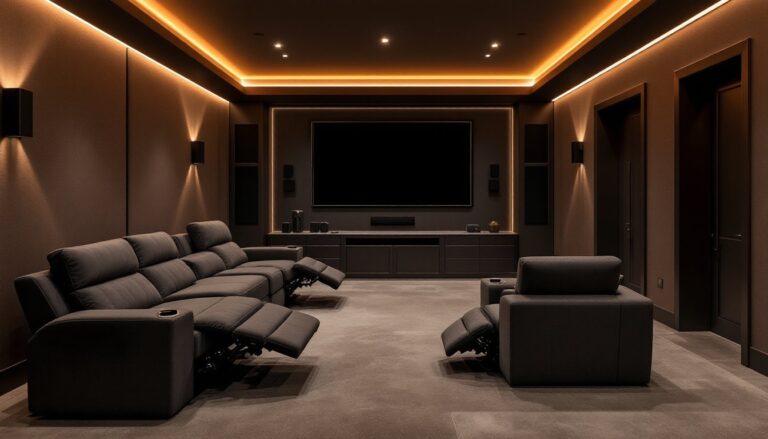
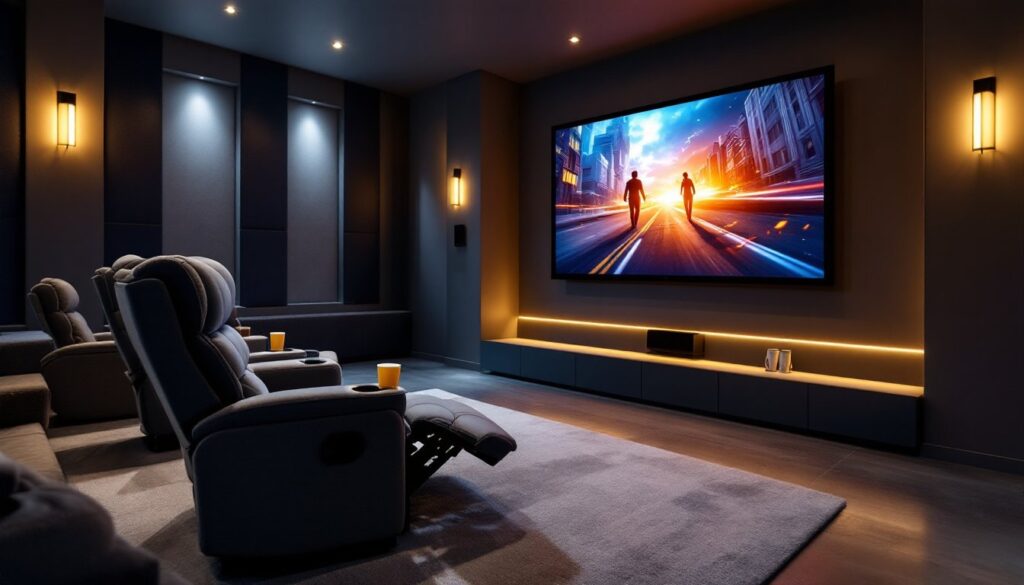
Motion seats, often called power recliners, are the most popular choice for dedicated home theaters. These seats feature an electric motor that tilts the backrest backward while simultaneously raising a footrest, creating a near-flat reclined position. Most allow infinite recline positions rather than just a few preset angles.
Motion seats come in single, loveseat (two-seat), or full-row configurations. A standard single recliner measures roughly 32–36 inches wide, while a loveseat runs 58–65 inches. When fully reclined, expect the seat to extend 20–30 inches toward the room, so measure your available depth carefully. Power recliners require a nearby electrical outlet or you’ll need to run an extension cord under your flooring, if you’re running cord under carpet, protect it with a cable cover to avoid a tripping hazard.
Heating, massage, and wireless connectivity are increasingly common features. These add convenience but also cost and potential repair complexity. A basic power recliner typically runs $800–$1,500 per seat, while luxury models with these features can exceed $3,000–$4,000. Budget varies widely depending on upholstery grade and frame construction.
Fixed and Stationary Seating
Fixed seating, chairs or benches bolted to the floor, offers durability and takes up slightly less space than recliners since there’s no extension mechanism. They’re ideal for tight rooms or when you want maximum seating in a limited footprint. Fixed theater seats still provide lumbar support and proper ergonomics: they simply don’t move.
Fixed options include stadium seating (tiered rows), individual fixed seats, or fixed benches. Stadium seating solves a common problem in home theaters: when viewers sit at the same height, those in front block the sightlines of those behind. Proper theater design staggers seat rows about 9–12 inches higher with each row back. If your budget and space allow, stadium seating creates a better overall viewing experience for groups.
Fixed seats are easier to install, usually just bolting to subfloor, and require no electrical hookup. They’re also simpler to clean and maintain. Pricing is generally lower than comparable motion seats, typically $600–$1,200 per seat, though custom or tiered installations cost more.
How to Choose the Right Theater Seats for Your Space
Start by measuring your room’s usable depth and width on graph paper. Mark window locations, door swings, and any fixed elements (heating vents, electrical outlets). Theater seating needs clearance in front, typically 3–4 feet minimum between the front row and the screen for comfortable viewing angles.
Calculate the ideal viewing distance using the 1.5 to 2.5 times screen width rule. If your screen is 100 inches wide, optimal seating distance is 12.5 to 20 feet from the screen. Seats positioned too close cause neck strain and distort perspective: too far away and viewers miss detail and immersion.
Consider your primary use case. If you’re hosting movie nights with kids and guests, a larger loveseat or sectional layout makes sense. If it’s mostly for two people, a pair of single recliners or a loveseat fills the need without waste. Think about future flexibility, can you reconfigure or add seating later if your household needs change?
Upholstery matters more than many realize. Leather is easy to clean and durable, but gets cold to the touch and can squeak. Microfiber and synthetic fabrics offer warmth and quiet operation with easy cleaning, though they may show wear over time. Fabric blends split the difference. Ensure any fabric you choose is treated for stain resistance.
Test before buying if possible. Visit a furniture showroom and sit in potential candidates for a few minutes. Check that armrest height feels right, that the seat cushion depth accommodates your legs properly, and that headrest angle works for your frame. Online retailers with liberal return policies let you test at home, but factor in shipping costs, theater seating is heavy.
Installation and Setup Tips for DIY Enthusiasts
Before delivery, protect your flooring. Theater seats are typically 200–400 pounds each depending on style and size. Lay down plywood or hardboard under delivery paths and beneath the final seat location to distribute weight and prevent damage to hardwood or tile. Use furniture sliders to position seats without dragging them across the floor.
For power recliners, identify your nearest outlet before the seat arrives. If no outlet exists where you need it, you’ll need to run new circuit wiring, a job requiring a licensed electrician and potentially a permit, depending on your jurisdiction. Never daisy-chain power recliners together or overload a single outlet: each seat should ideally have its own 15-amp circuit.
If installing fixed seating or stadium-style rows, mark subfloor locations precisely. Use a stud finder to locate floor joists if possible, since bolting into solid wood is stronger than relying on fasteners in subfloor alone. Consult your local building code, some jurisdictions require that rows of fixed seating over a certain height use specific bolt patterns and spacing. This isn’t complicated, but it matters for safety and code compliance.
Staging is crucial. Arrange seats to optimize the viewing angle from each location. The back row should have an unobstructed sightline to the screen: adjust row heights and spacing accordingly. Account for wall-mounted speakers and acoustic panels, they shouldn’t interfere with seat placement or vice versa. Temporary placement using laser levels helps visualize angles before permanent installation.
Run cables and electrical lines after positioning seats. This keeps cords organized and hidden, prevents tripping hazards, and makes future adjustments easier. Use cable conduit or raceway along the floor or baseboard to protect power and AV cables from foot traffic and damage.
Maintaining Your Home Theater Seating
Theater seating is a long-term investment, and simple maintenance extends its life. Vacuum upholstered seats weekly if they’re used regularly, dust and skin cells settle into fabric and can degrade fibers over time. Use an upholstery brush or soft-bristle attachment on your vacuum to avoid pulling fabric.
For spills, act fast. Blot with a clean cloth (don’t rub), then use a damp cloth with mild soap and warm water to spot-clean. Most theater seats come with care instructions from the manufacturer, follow them to avoid voiding any warranty. Leather seats need occasional conditioning to stay supple: use leather conditioner per the maker’s guidelines.
Power recliners need annual inspection of moving parts. Check that mechanical hinges move smoothly and that electrical connections are tight (unplug before checking any electrical components). If a power motor begins making noise or moves slowly, have a technician evaluate it rather than attempting repairs yourself, replacement motors are available, but installation requires specific mechanical knowledge.
Guard against sun damage. UV light degrades upholstery color and breaks down fibers over time. Install blackout blinds or cellular shades if your media room has windows, and keep them closed during the day. Theater rooms are typically darker anyway, so window treatments serve double duty.
Encourage good seating habits, no standing or jumping on seats, and keep liquids away from electronics. Spilled liquid on a power mechanism can cause electrical failure. A simple rule: drinks go in cup holders only, and remove containers before reclining. Theater seating built with intelligence will stay comfortable and functional for 10+ years with basic care. The smart design of modern seats, coupled with proper installation and maintenance, ensures your viewing experience remains excellent for years to come.